
The 3 Types of AI Your Board Will Ask About
AI isn't one thing. In enterprise settings, it plays three distinct roles: the Analyst, the Creator, and the Worker. Confusing them creates misaligned expectations from the start.

A CEO says "we need to use AI." The data team says "we've been using it for years."
Both are right. They're describing completely different things.
AI isn't one thing. In enterprise settings, it plays three distinct roles, and confusing them creates misaligned expectations from the start.
The Analyst: Traditional AI that predicts outcomes, classifies data, and supports better decisions. It's been running quietly in risk models, fraud detection, and demand forecasting for years. Proven. Often invisible. Usually well-governed.
The Creator: Generative AI that drafts, summarises, translates, and generates. The technology most people mean when they say "AI" right now. Moving fast. High value when matched to the right problem. Still needs guardrails.
The Worker: Agentic AI that plans steps, uses tools, and executes tasks across systems with limited human input. Early-stage in most enterprises. High potential. Requires the most oversight.
Each plays a different role. Each carries different risk. Each needs different governance.
The organisations making real progress are clear on which type they're working with, and what it needs from them to work safely at scale.
The ones who struggle tend to treat all three as the same thing.
Getting your leadership team to this shared understanding is usually the most valuable two hours in an AI programme.
More from the blog
 Blog · Leadership & Strategy, Value & Outcomes
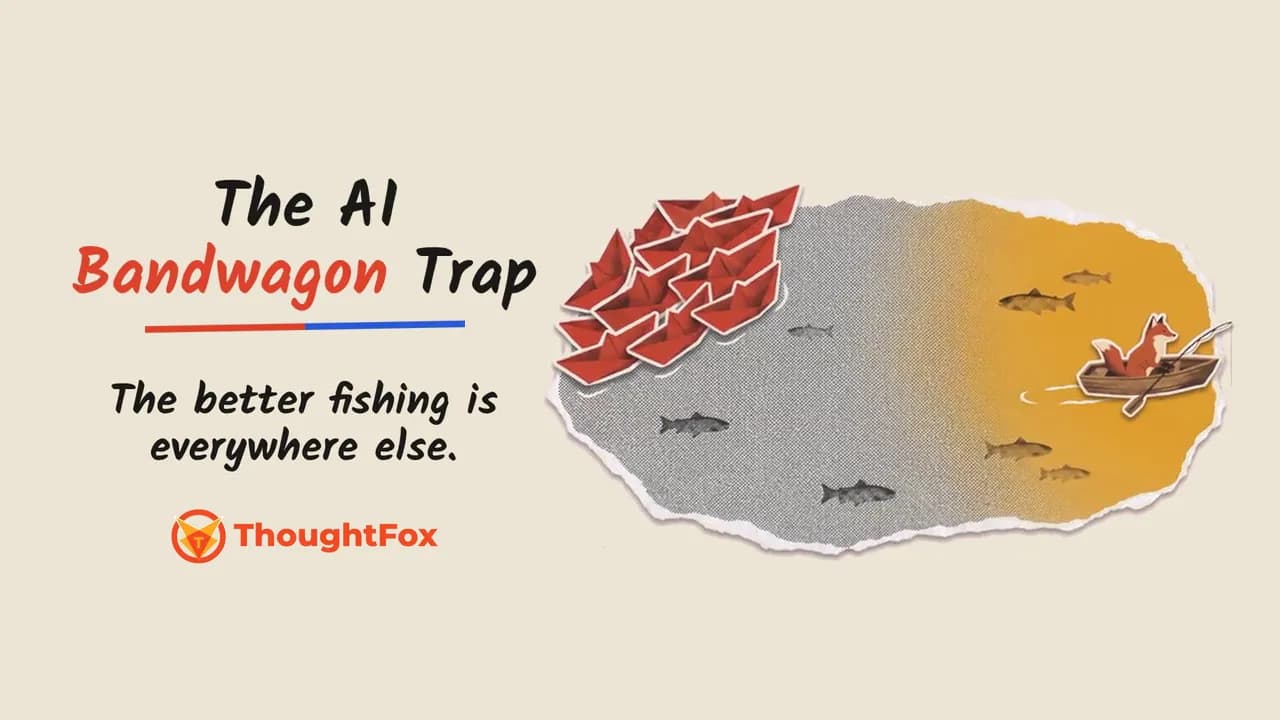
The AI Bandwagon Trap
The AI moves that get the most airtime rarely give you an edge. Five filters for mid-market leaders to find the AI workflows the crowd is missing.
 Blog · Leadership & Strategy, Value & Outcomes
The AI Automation of Your Workflows Worked Perfectly (and That's Exactly What Went Wrong)
Most organisations have never examined the gap between what they believe their work should achieve and what their operations actually reward. AI doesn't close that gap. It makes it visible.
 Blog · Leadership & Strategy
Why AI Pilots Stall, and What to Do Before the Build Begins
Most AI pilots don't fail because of the technology. They stall because nobody mapped the failure points before the build began.
Not sure where to start? That’s the right time to call.
Whether you have licences, pilots or nothing yet, we’ll help you pick a sensible first step.