
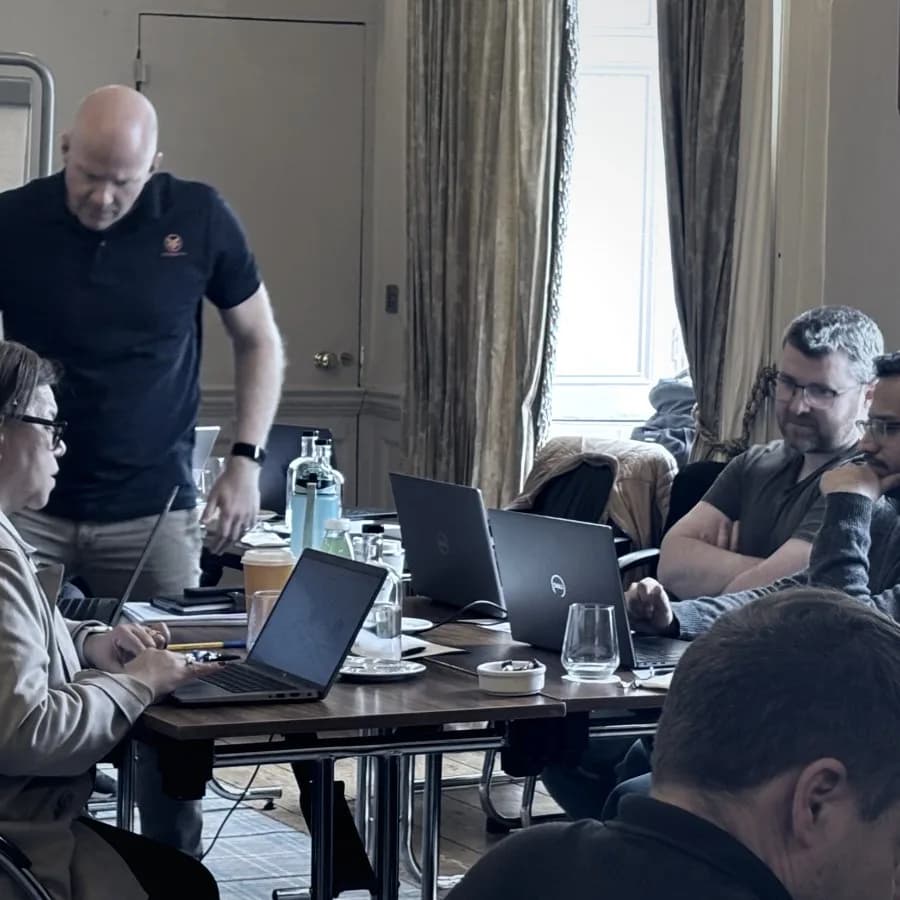
The right technology. The right moment. A team ready to build.
Running a scaled, multi-site food manufacturing operation means managing real complexity: supply chains, regulated processes, and a technology function the entire business depends on.
Kepak's leadership had been watching the AI landscape for two and a half years with a clear position: move when the tools are genuinely ready, and only in a way that builds lasting capability inside the team. By early 2026, that moment had arrived.
Eddie Johnson, Head of Digital Transformation at Kepak, had been navigating this landscape for a long time. Not because the team was incapable. Not because the technology did not exist. But because for most of the past two years, AI tools had not been ready for a business like this. Deploying them prematurely would have meant creating new problems to solve the old ones.
By early 2026 that had changed. The tools had caught up. The question was no longer whether to move. It was how to move in a way that would actually stick.
Kepak's technology leadership had been watching the AI landscape without committing to it. That restraint was deliberate. The tools available in 2023 and 2024 required developers to operate them. They were being distributed across industries without training. Training was being delivered without strategy. Too many organisations ended up with tool licences sitting unused and automations nobody engaged with.
Eddie Johnson had pushed back on premature AI adoption precisely because he had seen what the wrong kind of engagement looked like. His criteria were clear when the moment did come: any programme would need to be practical and hands-on, anchored in real systems and real workflows rather than demonstrations, it would need to build capability inside the team rather than create another external dependency, and governance and responsible AI compliance would need to be built in from day one rather than added as an afterthought.
The opportunity was significant. A group of 20 people across software development, data engineering, and business systems knew exactly where the value lay. They had identified the priority workflows. They understood the problems. What they lacked was a framework that would let non-developers act on that knowledge directly, without routing every idea through a development backlog that was already overloaded.
A supplier invoice automation deployed earlier had worked technically, but the person it was meant to help continued processing invoices manually, using the system only intermittently. The technology worked. The adoption did not.
Knowledge transfer, not dependency. Working systems, not pilot programmes.
Kepak came to the engagement with clear criteria already formed. Eddie Johnson and Jeremy O'Callaghan had been evaluating options since late 2025, and three things distinguished ThoughtFox from what else was on the table.
Working prototypes by the second session, not recommendations. The structure committed to tools in the team's hands, built by them, before the programme was halfway through. No deliverables deck. No executive summary standing in for capability.
Capability-first. Every tool owned by Kepak. Every tool built during the programme would be owned by the Kepak team, with the skills to maintain and develop it independently. The engagement was designed to make ThoughtFox unnecessary.
Governance and responsible AI, built in from the start. EU AI Act compliance, risk classification, and the PRIME governance methodology were part of the structure from day one, not added at the end when momentum had already built.
"We made a deliberate decision to wait until the technology was right for our environment. By early 2026, it was. The results have validated that call."
Eddie Johnson, Head of Digital Transformation, Kepak
That alignment with Kepak's stated requirements was what made the engagement viable. Consulting that sunsets itself is a harder business model than consulting that perpetuates itself, and it is the only model that meets a capability-first brief honestly. The goal is for every client to walk away self-sufficient.
A maturity baseline on day one. Working tools by day two. Governance before day three was out.
The programme ran across four sessions spanning March and April 2026.
Session 1: the honest picture.
The opening session was not a presentation. It was a structured conversation with ten senior technology and business leaders, mapped across multiple dimensions of AI readiness: from leadership commitment and strategic alignment through to culture, capability, and how value was being realised.
Leadership buy-in was strong at the top. There was genuine enthusiasm and appetite across the team. The assessment also surfaced what you would expect in any complex, scaled operation: deep institutional knowledge not yet fully codified, data distributed across systems built for a different era, and AI experimentation ready to be formalised and governed.
The EDI order validation workflow was selected as the starting point: a clearly bounded, high-visibility problem the whole team could see and the whole business would recognise when it improved.
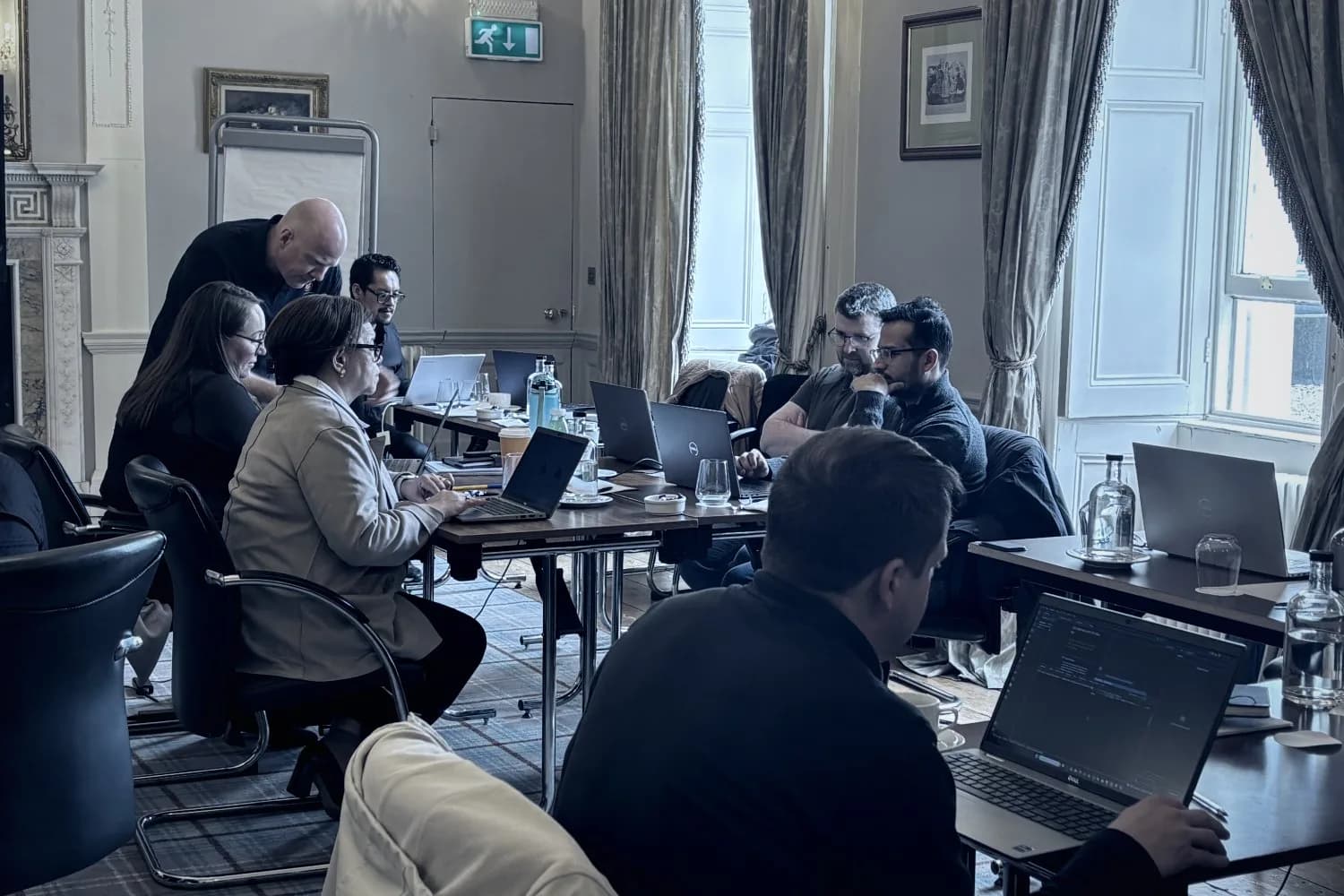
Session 2: Developers, data engineers, and business systems people, building side by side.
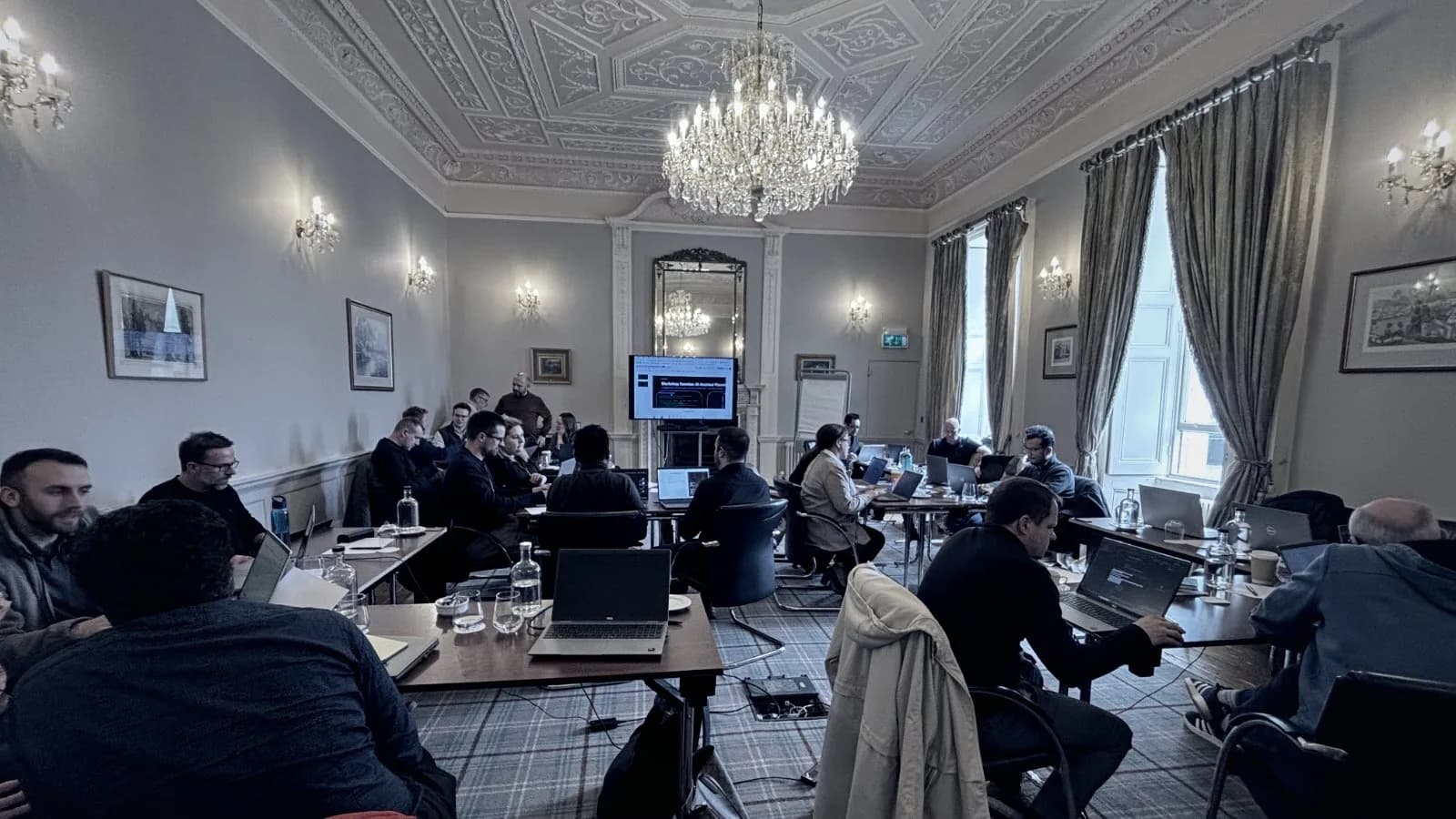
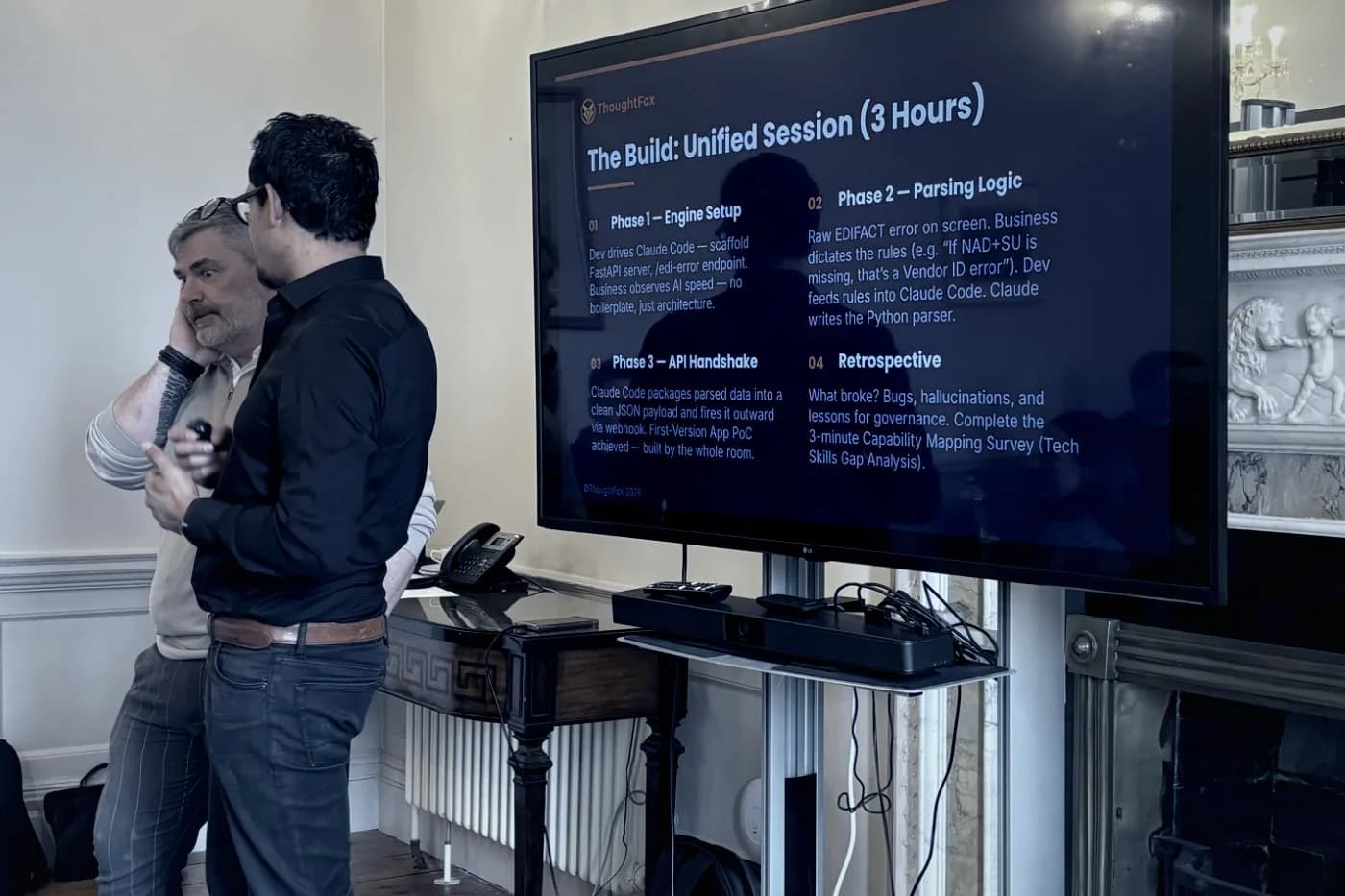
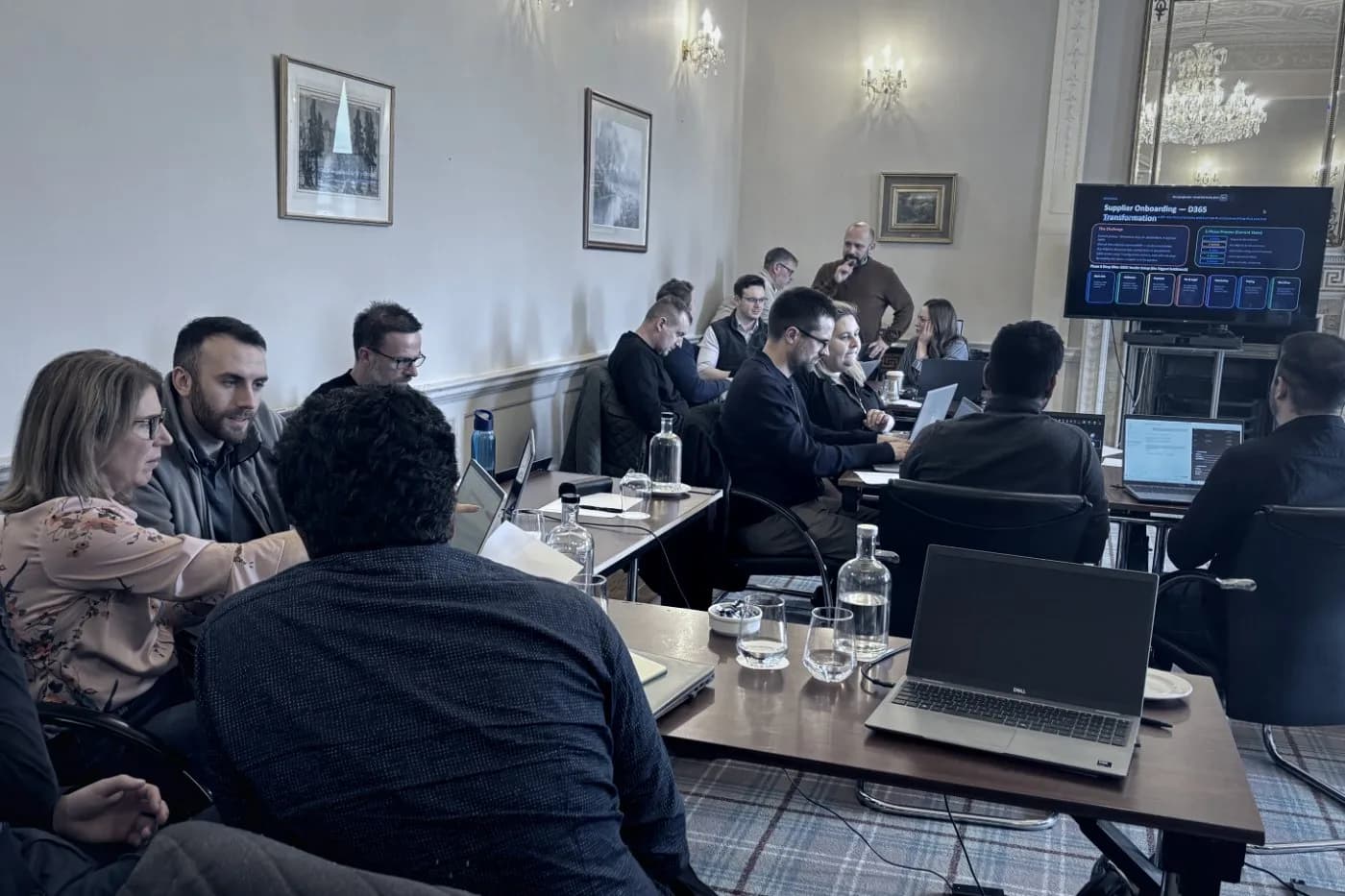
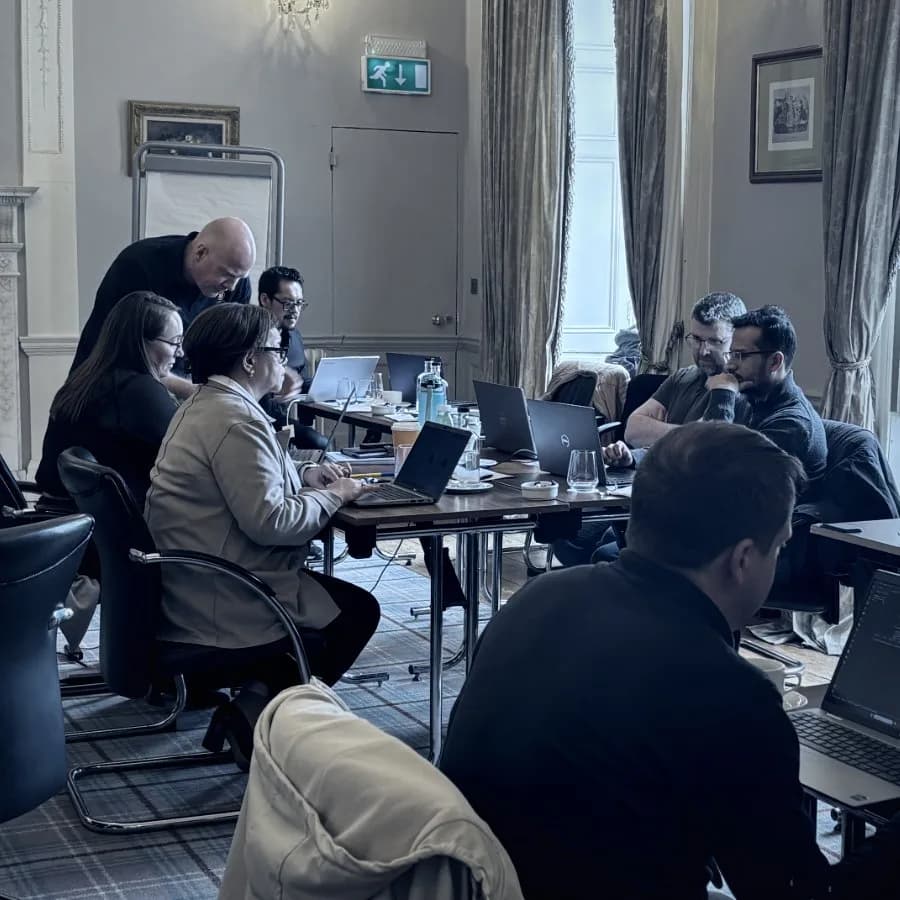
The activation session brought the team together for a full day of hands-on work. Some had coding backgrounds; many did not. ThoughtFox split the room: technical staff worked with Claude Code, the rest through a no-code interface. The result: two working prototypes that did not exist at the start of the morning.
Prototype 01: The EDI Error Validator. Automating a recurring batch of weekly errors that had sat in the inbox for years.
Prototype 02: The Supplier Onboarding Automator. Reducing a multi-day manual intake process to minutes.
The technical team approached the problems from the back end: code, architecture, implementation. The non-technical team approached from a different angle entirely, asking what the business actually needs. Both groups reached working solutions. The non-technical group, freed from thinking about implementation, often produced something more immediately useful as a business tool.
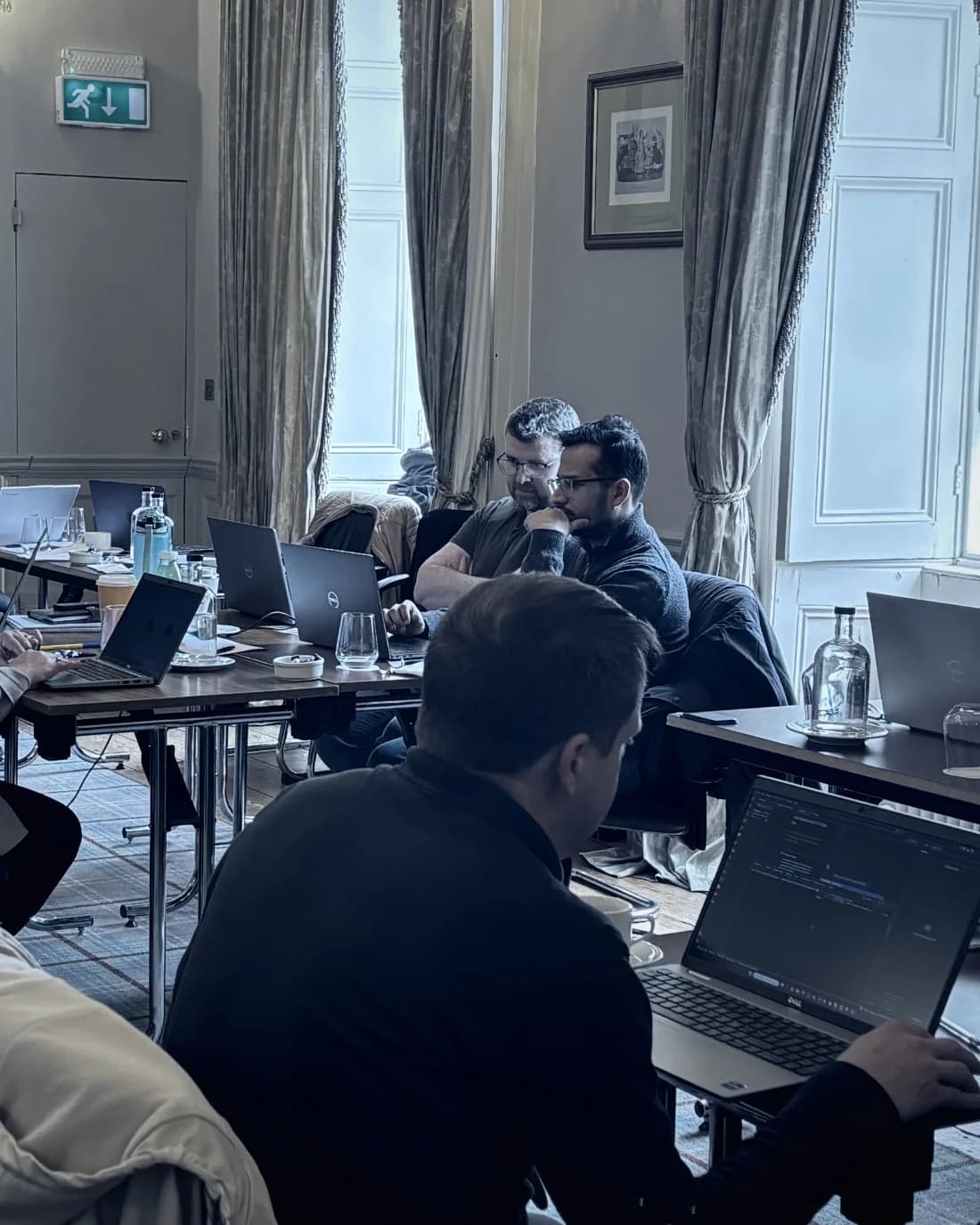
Session 3: Putting guardrails on the excitement. Responsible AI built in. PRIME applied.
Session 3 ran in two parts: a structured responsible-AI and EU AI Act teaching session, and the application of the PRIME governance framework retrospectively to both prototypes from Session 2.
ThoughtFox's responsible AI specialist led a dedicated teaching session covering the EU AI Act risk framework, what compliance means in practice, and how to approach governance as an ongoing organisational capability rather than a one-off constraint. Both prototypes were assessed and classified under the EU AI Act framework, with mandatory human approval gates confirmed in both cases.
PRIME was introduced as a framework and walked through live against the two prototypes from Session 2. The five pillars define what every governed, production-ready AI system or workflow build must answer: Purpose (what's being built, and who owns the outcome), Realistic assessment (what's the real risk), Implement with audit trails (can we prove what happened), Monitor through evals (does accuracy hold over time), and Enable and transfer (can the team own it).
The governance work was not a brake on momentum. It was what gave the team confidence that the momentum was pointed in the right direction.
The most revealing evidence did not arrive in Session 4. It arrived in the gap.
Without prompting, Kepak team members went home after the build day and applied what they had learned to their own challenges. None of this was assigned work. All of it happened because the team now had the tools, and the confidence, to act on problems they already knew about.
A security improvement on an internal reporting dashboard was completed from a phone, with the laptop in another room. A week earlier, this would have been a sprint of paired developer time.
Years of accumulated work for a legacy migration were completed in a single working day. The task had sat on the backlog for months. It was no longer on the backlog by Session 4.
A complex approval process that had relied on physical sign-off across multiple desks was automated, routed, and working by the readout. Built without oversight from ThoughtFox.
By Session 4, the question had already moved on. It was no longer whether this worked. It was how to scale it.
Session 4 delivered a leadership-facing readout covering a review of everything that had been built, and a structured conversation about the 90-day and 12-month roadmap. It concluded with five priority workflows identified with named owners and clear value statements, a 30-day action plan agreed in the room, and a sequenced three-horizon roadmap for the weeks ahead.
A team that can now build, and has already demonstrated what it can do without external guidance.
The On-Demand Technology team had always been at the centre of how Kepak operates. The programme accelerated a shift already underway: from reactive support partner to proactive capability builder. By the end of the four days, the team was generating and implementing ideas faster than any backlog could contain them.
"Fantastic session. Ease of use, scope is enormous. Engagement, training and ideas from the ThoughtFox team was very enlightening."
Sinead Nolan, Group Data Architect, Kepak
Early movers are building advantages that compound, quietly.
AI adoption in Irish manufacturing is accelerating, and it is doing so unevenly. Companies with engaged technical teams, structured workflows, and leadership buy-in are beginning to build advantages that are genuinely difficult for later movers to close.
The gap is not primarily about technology access. Anyone can access the same models. The gap is about organisational capability: the scaffolding of frameworks, governance, skills, and culture that determines whether those models deliver real value or remain interesting experiments.
Kepak's programme is one data point. But it is a representative one. A team of 20 people, none of them pure AI specialists, built two working prototypes in a single day, established a governance framework by the third session, and was generating and implementing new ideas independently before the programme ended. That is what building internal capability looks like in a traditional manufacturing operation.
The industries with the most to gain from AI are not the tech-native ones. They are the ones with real operational complexity, real processes, and real institutional knowledge that has never had proper tools to work with. Food manufacturing and meat processing are exactly those industries. The organisations that begin building that capability now will be operating with structural advantages by the time the majority of the sector starts moving seriously.
The time to start is not when the landscape stabilises. It never will. The time to start is when your team is ready to learn, which in most cases is sooner than they think.
For a sector sometimes cast as traditional, the signal from the Kepak programme is unambiguous: the institutional knowledge is already there. The tools, finally, are ready to meet it.
Three horizons: sequenced, owned, and agreed in the room.
The 90-day and 12-month roadmap concluded with three clear horizons of work.
Horizon 01: 30 days. Harden what exists. Ship the next two.
Horizon 02: 90 days. Scale the pattern beyond On-Demand Tech.
Horizon 03: 12 months. A business that builds its own tools.